
Aluminium sliding-folding doors create wide openings, connect indoor and outdoor areas and bring natural light into a room. Although aluminium is durable and low maintenance, the moving parts of a folding system still benefit from regular care.
The following routine will help protect the finish, keep the panels moving smoothly and identify small problems before they become costly repairs.
Clean the frames gently
Start by removing loose dust with a soft brush or cloth. Wash the aluminium with clean water and a small amount of mild, pH-neutral detergent, using a soft sponge or microfibre cloth. Rinse with clean water and dry the frames to prevent streaking.
Avoid steel wool, scouring pads, scrapers, solvents and strongly acidic or alkaline cleaners. Abrasive products can scratch powder-coated or anodised finishes, while aggressive chemicals may damage seals and hardware.
In an ordinary urban environment, a light clean every few months is a useful baseline. Doors exposed to heavy dust, construction residue or swimming-pool chemicals may need more frequent attention.
Keep the glass clear
Use a suitable non-abrasive glass cleaner or a mild soap solution. Apply it with a soft cloth and finish with a squeegee for a clear, even result. Prevent cleaning chemicals from collecting around the frame joints or seals.
Never use blades to remove marks unless a glass professional confirms that it is safe. Fine debris trapped under a blade can permanently scratch the glass.
Vacuum and wipe the tracks
Tracks are the busiest part of a sliding-folding system. Sand, leaves, pet hair and small stones can obstruct the rollers and make the door feel heavy.
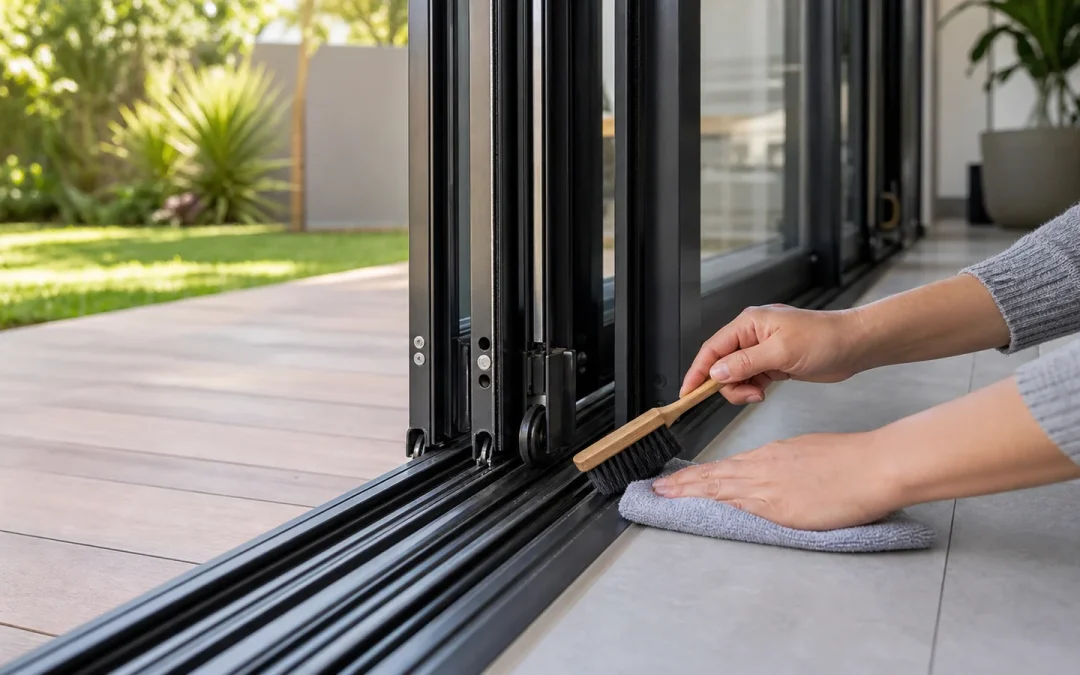
Open the panels and vacuum the full length of the track, including corners and drainage areas. Loosen stubborn dirt with a soft brush, then wipe the channel with a damp cloth. Do not flood the track, and make sure drainage openings remain clear.
If the door still catches after the track has been cleaned, do not force it. A misaligned panel or worn roller may need professional adjustment.
Check rollers, hinges and handles
Operate the door slowly and listen for scraping, clicking or grinding. Check that the panels align, hinges are secure and handles and locks operate without excessive force.
Only use a lubricant recommended for the specific door hardware. General-purpose oils can attract dust or affect some components. Never loosen adjustment screws unless you understand the system, as folding panels are heavy and correct alignment is important for safe operation.
Inspect seals and drainage
Look for seals that are loose, cracked, compressed or pulling away from the frame. Effective seals help control draughts and water. Clear dirt from drainage slots, and watch the door during heavy rain for signs of unusual water entry.
Water problems may be caused by blocked drainage, worn seals, incorrect alignment or conditions around the opening. Early inspection is usually easier than repairing damage after repeated exposure.
A simple maintenance schedule
- Monthly: Remove loose debris from tracks and check operation.
- Every few months: Wash frames and glass and clear drainage paths.
- Twice a year: Inspect seals, rollers, hinges, handles and locks.
- When performance changes: Arrange an assessment rather than forcing the door.
Professional help when you need it
Regular cleaning will handle most day-to-day care, but damaged rollers, misaligned panels, worn hardware and water-entry issues should be assessed properly. GA Glass & Aluminium manufactures and installs aluminium sliding-folding doors throughout Johannesburg. Contact our team for advice on new custom doors or assistance with an existing installation.
Explore our glass and aluminium products, view our project gallery, or request a quotation.